


Digital transformation on the sell-side has moved fast. The front office is more automated than ever, leveraging high-frequency trading algorithms and sophisticated risk management engines. Yet, for many brokerages, ensuring trades, positions, and client money are perfectly aligned remains a highly manual task.
Most brokers rely on core automation for high-volume trade matching, but these reconciliation systems often create “automation gaps”.
Middle-office teams often resort to bridging these gaps with manual interventions. They pull data from exchange portals, manage complex inter-company breaks, or reconcile derivative positions on fragmented spreadsheets.
Over time, this results in a ‘spaghetti IT’ environment where legacy platforms are held together by manual ‘shadow IT’ processes. The ‘last mile’ of the trade lifecycle – synchronising internal ledgers with the external world of central counterparties (CCPs) and custodians – has proven incredibly difficult to automate fully.
The five critical data roadblocks faced by modern brokerages
There are five key attributes of financial data that create operational friction and block your automation efforts: variety, change, scale, lifecycle and control.
These challenges are exacerbated by the reliance on legacy reconciliation technology. On-premise, hard-coded systems often require specialised developers for every small adjustment and operate on rigid 6-to-12-month upgrade cycles. They are ‘legacy’ not just because of their age, but because they lack the agility required for today’s fast-moving markets.
Let’s take a look at what makes each of these five data attributes so challenging.
1. Inconsistent data feeds from exchanges and clearing houses
Brokers sit at the centre of a web of data. You aren’t just managing internal records; you are reconciling against a vast array of external sources. These include exchanges, CCPs, electronic communication networks (ECNs), and diverse counterparties.
Each of these provides data in a different flavor, from standardised FIX messages to archaic flat files or proprietary CSVs.
Even when data is ‘standardised’, subtle differences can confound matching algorithms. For example, the timestamp on a transaction, or how a counterparty identifies an instrument.
Normalising this data to compare it against your internal trade repository remains a massive, often manual, hurdle for middle-office teams.
2. A world of constant change
Brokerages don’t operate in a static environment.
Operations teams must navigate a daily barrage of changes, which could include launching new synthetic products or onboarding new clearing members. Beyond business growth, the market itself creates change through extreme volatility, complex corporate actions, and dividend adjustments.
Regulation is another constant source of change. The industry-wide move to T+1 settlement, and the evolution of reporting regimes like CFTC or EMIR, are placing Operations under increasing pressure and scrutiny.
Updating legacy systems to meet the requirements of the latest rules is a big lift. Ops teams are forced to manage the risk manually in the interim.
3. Scale – the problem that keeps on growing
The technology used in many brokerage operations simply isn’t built to scale. As explored earlier, the shortcomings of legacy systems create data errors and the need for manual work. These scale when volumes scale.
You can’t just hire ten times the staff to manage the resulting breaks from a tenfold surge in volumes. It’s prohibitively expensive and, even if it weren’t, volume can spike in moments – headcount growth takes months.
4. Tracing the trade journey from front-office to general ledger
Trade data is rarely static; it evolves as it moves from the execution desk through middle-office enrichment and finally to back-office settlement. Along the way it’s often transformed by multiple systems or in spreadsheets to fix formatting issues.
This creates a major visibility problem. It can be nearly impossible to trace the data lineage back to the source when the general ledger doesn’t match the front-office P&L.
This lack of transparency causes significant complications during regulatory audits or client money (CASS) reviews.
5. Balancing middle-office agility with regulatory control
Brokers operate under intense scrutiny regarding risk and governance. Traditional change management is designed to protect the firm, but it often results in operational paralysis.
Legacy systems are hard-coded, meaning only skilled developers in IT can build or change processes. Ops must document their requirements and wait for their turn in the development queue.
This can take days, weeks, or even months depending upon the complexity of the process and the workload of the IT team.
Operations teams frequently bypass these bottlenecks with ‘temporary’ manual workarounds to meet their deadlines.
In other words, the processes designed to ensure governance and control are at odds with the needs of the business. They often create the very thing they’re trying to mitigate: risk.
Modernising the brokerage operating model
The challenges outlined above have confounded automation efforts for decades. Advances in no-code, cloud-based data platforms, however, are allowing brokers to rethink the reconciliation function entirely.
Moving away from rigid, IT-dependent tools empowers subject matter experts in Operations and middle-office teams.
This shift unlocks an agile operating model where breaks are resolved faster, transparency is absolute, and skilled professionals can focus on managing risk rather than managing spreadsheets.
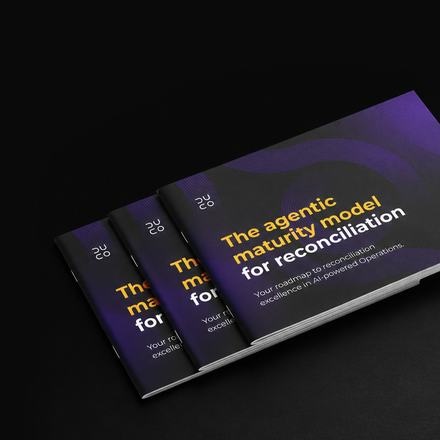
Find out how to advance your organisation along this path with our Reconciliation Maturity Model.