


The digital transformation of the buy-side has been extensive in recent years. Portfolio management systems are more sophisticated than ever, and trade execution is increasingly algorithmic.
Some areas, however, remain tough nuts to crack. Reconciliation – the backbone of accurate net asset value (NAV) calculation and fiduciary oversight – is certainly one of them.
Most asset management firms have core automation platforms, usually focusing on specific asset classes or functions like trade matching. These point solutions automate the majority of the trade lifecycle, yet they simultaneously create ‘automation gaps.’
For example, data in complex formats can’t be ingested or reconciled by these point solutions. Operations teams fill these gaps with manual workarounds, such as in spreadsheets or other end-user computing (EUC) solutions.
Over time, this combination creates a ‘spaghetti IT’ ecosystem of disparate platforms and manual ‘shadow IT’ processes. This is the “last mile” of reconciliation automation, and it has so far proven impossible to conquer.
So why is this still the case for firms managing billions in AUM? To understand this, we need to explore the specific difficulties of dealing with investment data.
Five data drivers of operational friction in asset management
Every firm has a unique tech stack. However, almost all asset managers find their automation efforts stymied by five core data challenges: variety, change, scale, lifecycle, and control.
These automation challenges are particularly problematic because many asset managers still rely on legacy reconciliation solutions.
These usually on-premise, highly technical systems require heavy IT support and are often only updated in 6-to-12-month cycles. They are ‘legacy’ not just because of their age, but because they don’t solve today’s problems. In fact, they create many of them.
Let’s take a look at what makes each of these five data attributes so challenging.
1. Data variety across custodians and administrators
Asset managers rarely deal with a single data format. Instead, the custodians, fund administrators, and prime brokers they deal with all have different ways of sharing and presenting data. This ranges from structured ISO files to Excel spreadsheets and CSVs.
This problem only compounds as firms move into private markets. A significant amount of vital transaction data is locked in PDFs, such as capital call notices, or emails.
Normalising this data to compare it against an internal Investment Book of Record (IBOR), for example, is a massive manual hurdle.
2. The relentless pace of market and regulatory change
Change is ever present in the world of asset management.
Operations teams must deal with daily shifts. These range from business-level changes like onboarding new custodians or other counterparties to market-driven changes like complex corporate actions, dividends, and extreme volatility.
Regulation adds another layer of complexity. The shift to T+1 settlement in North America meant firms must adapt their reconciliation logic quickly, and tighter settlement windows are coming to Europe and the UK as well.
On top of this, recent rewrites to European Market Infrastructure Regulation (EMIR) mean asset managers are responsible for the accuracy of their reporting data even if they delegate reporting. This means you need to have strong controls in place internally to check data quality, regardless of whether or not you do the actual reporting.
That’s difficult, if not impossible, in a legacy environment. Changing a reconciliation rule to accommodate a new regulatory field can take weeks of IT development, leaving Ops to manage the risk manually in the interim.
3. Scaling Operations – beyond headcount growth
The traditional technology used in investment operations isn’t flexible enough to scale with AUM growth.
The volume of transactions and positions to reconcile can double overnight when volatility drives a spike in trade volumes.
Meeting that need with headcount growth is impossible – budgets stay flat even as data tasks surge. Even if it weren’t, volume can spike in moments, whereas headcount growth takes months.
4. Following data lineage from front-to-back
Data evolves as it travels from the front-office order management system (OMS) or execution management system (EMS) through to the middle-office and finally to the custodian. This journey sees data transformed, enriched, and often modified in “shadow IT” spreadsheets.
Many asset managers find there are multiple versions of ‘the truth’ circulating. The portfolio manager sees one set of positions, while the Operations team sees another based on settled trades. It becomes difficult to tell exactly where a piece of data originated or why a specific transformation occurred.
All this makes it nearly impossible to maintain a golden source of data for reporting.
5. Balancing operational agility with institutional control
Asset managers operate under strict fiduciary duty – a legal obligation to act in clients’ best interests. It’s enforced through frameworks like the UK’s Senior Managers and Certification Regime (SMCR), the EU’s Alternative Investment Fund Managers Directive (AIFMD), and the US Sarbanes-Oxley Act (SOX).
Each regime holds named individuals personally accountable for governance failures. Compliance requires not just doing the right thing, but being able to prove it through documented controls and auditable processes.
Traditional change management is designed to provide exactly that paper trail. But it often does so at the expense of agility, especially when hardcoded systems are involved. Operations teams must brief requirements into IT and compete for resources against priorities from across the business.
Teams often resort to manual workarounds instead in order to meet their deadlines. The result: opaque processes, undocumented fixes, and institutional knowledge that lives in one person’s head rather than a system.
It breaks the governance structures that fiduciary duty demands. All because the data is too complicated for traditional systems to handle in a timely manner.
Modernising the asset management operating model
Technological advances are finally enabling asset managers to overcome legacy hurdles and address these fundamental data challenges once and for all.
This unlocks a more agile operating model where risk is reduced, transparency is increased, and talented professionals can spend their time on value-adding analysis rather than data entry.
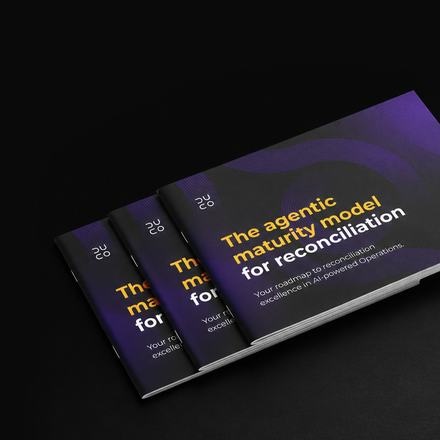
Find out how to advance your organisation along this path with our Reconciliation Maturity Model.